Collection: Plumbing & Valves
The unglamorous half of a koi pond, and the half you will be glad you did properly. Lasco and Valterra PVC, ball and knife gate valves, swing checks, unions, bulkhead fittings and the odd Hayward part.
Two rules worth following: use bigger pipe than you think you need, because friction loss climbs steeply as diameter drops, and put a union either side of everything you might ever service. The extra twenty dollars in fittings is what stands between a ten minute job and cutting pipe out of a wet hole.

What kind of part?
Every fitting on this shelf, sorted by the job it does. Sizes are listed on each product.
 ValvesValterra ball, knife-gate and check valves plus 2- and 3-way diverters, 1 inch to 3 inch. Control, isolate or backflow-protect any line.Shop valves
 Elbows, tees & couplingsLasco Sch 40 PVC in 1-1/2 and 2 inch: 45s, 90s, street elbows, tees, couplings and the sweep elbows that go easy on your pump.Shop elbows & tees
 UnionsSelf-aligning unions, pump unions and replacement union nuts. The fitting that lets you service a pump without cutting pipe.Shop unions
 Adapters & bushingsMale and female thread-to-slip adapters and reducing bushings for stepping between 1-1/2 and 2 inch pipe.Shop adapters
 Bulkheads & bottom drainsBulkhead fittings from 3/4 inch to 4 inch, plus DreamPond KoiToilet bottom drains in 3 and 4 inch for through-liner plumbing.Shop bulkheads
 Suction, returns & trapsLeaf traps and strainer baskets that keep debris out of your pump, plus suction outlets and return inlet fittings.Shop traps & returns
 -
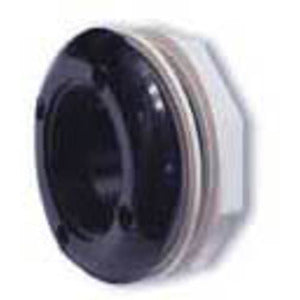
Bulkhead Fitting, Short Thread - 3/4" to 2"
Vendor:Regular price From $7.98Regular price -
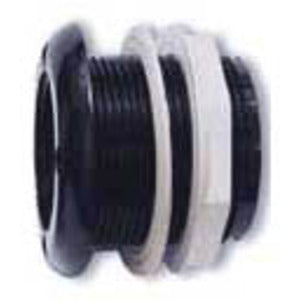
Bulkhead Fitting, Long Thread - 1" to 2"
Vendor:Regular price From $9.99Regular price