Collection: Pumps

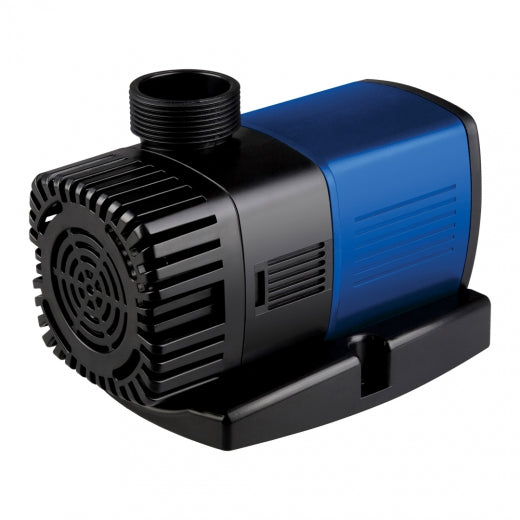
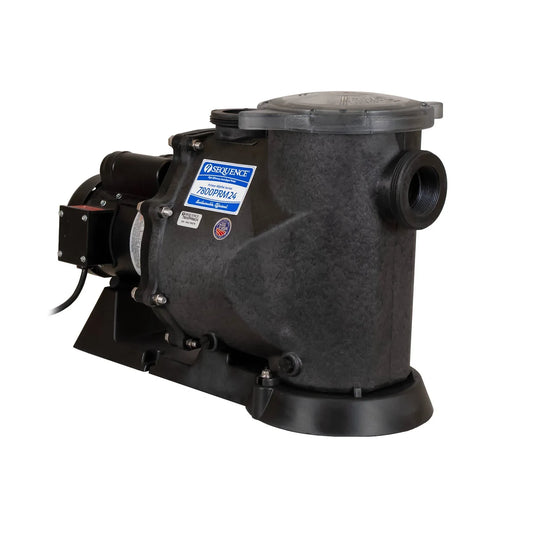
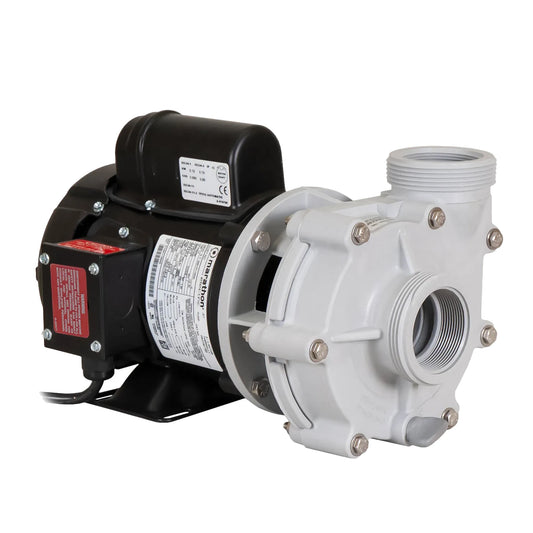
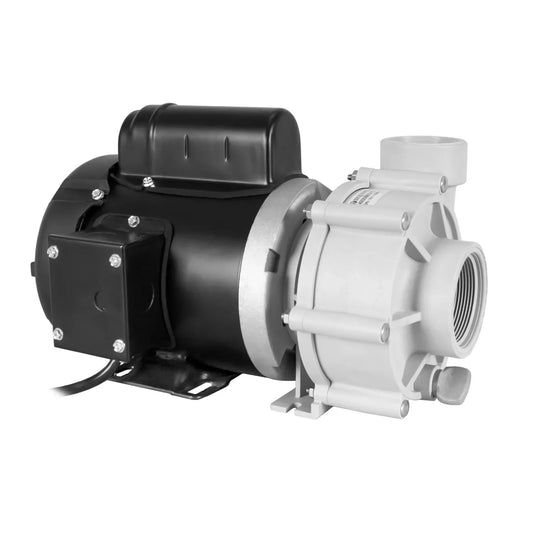
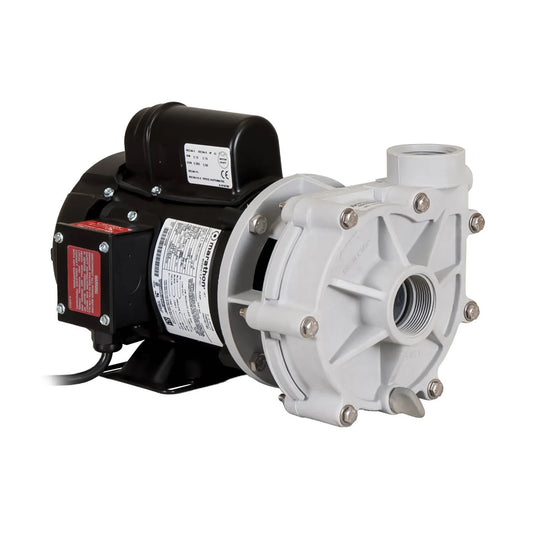
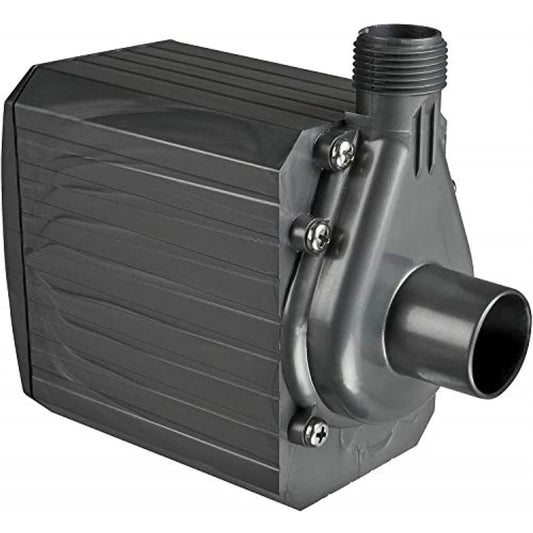
The pump is the heart of the system and the one piece that never gets a day off, so what it costs to run over a season matters more than the sticker price. External pumps from Sequence, Teton and Matala, plus PondMaster mag drive submersibles for smaller ponds and waterfall circuits.

Size on turnover: one full pond volume an hour for a lightly stocked pond, two for a typical hobby pond, and three once you are stocked heavily. Then check the manufacturer's curve at your real head height, because every foot of lift and every elbow costs you flow the headline number does not mention. One catch worth knowing: most external pumps are not self-priming and have to sit below the water line. If yours must sit higher, you need a self-priming model.

Black external pond pump fitted with white PVC unions, beside a length of PVC pipe on a stone ledge at a koi pond, the circulation heart of a koi filtration system.

Size it right the first time

Manufacturers' own numbers, the same charts behind our pond sizing calculator.

Pumps: match the flow to your pond, then check the head

Turnover depends on how hard the pond is stocked, not just how big it is. Plan on one full turnover an hour for a lightly stocked pond, two for a typical hobby pond, and three once you are stocked heavily. Then subtract for head: every foot you lift the water, plus friction in the pipe and every elbow, costs you flow. A pump rated 5,000 GPH at zero head might deliver 3,500 at the top of your waterfall, so size from the manufacturer's curve at your real lift, not the headline number.

Swipe the table to see our models →

Pond volumeTarget flow, typical stockingModels we stock
Up to 1,000 gal 1,000 to 2,000 GPH PondMaster Mag Drive, 250 to 2,400 GPH. Submersible, energy efficient, ideal for small ponds and waterfall features.
1,000 to 3,000 gal 2,000 to 6,000 GPH Sequence 750 (3,600 to 4,200), Sequence 1000 (3,300 to 6,100), Teton XT Ecostream (3,500 up).
3,000 to 6,000 gal 6,000 to 12,000 GPH Sequence 4000 (to 8,200), Teton XT8000, Matala Geyser Max Flow (to 6,200). Past about 8,000 GPH, split the flow across two pumps.
6,000 to 12,000 gal 12,000 GPH and up Two pumps on separate returns. Every pond this size splits the load, and at three turnovers an hour a heavily stocked one needs it.
Pump above water line Self-priming required Sequence Primer Alpha. Standard centrifugal pumps need flooded suction and will not lift water to start.

The middle column assumes a typical stocking at two turnovers. Halve it for a lightly stocked pond, add half again for a heavy one. Two pumps beat one either way: splitting flow between a filter loop and a waterfall gives you redundancy, and a failed pump at 3am stops being an emergency.

Worth knowing before you buy

Ground rules and answers from the ponds we run every day in San Jose.

Never run the pump dry, or the UV without flow

Mechanical seals fail in seconds without water, and a UV lamp running in a dry chamber overheats the quartz sleeve. Wire them so they start and stop together.

Put unions either side of everything

Pumps, filters, UV, valves. The extra twenty dollars in fittings is what stands between a ten minute service and cutting pipe out of a wet hole.

Common questions

Can I turn the pump off at night or in winter?+

Not at night, no. The bacteria in your biofilter need constant oxygenated flow, and they start dying within hours of losing it. Turning the pump off overnight is one of the fastest ways to wreck a mature filter, and night is also when oxygen is at its lowest.

Winter is a different conversation and depends on where you are. In hard-freeze climates many keepers shut the main pump and filter down, and run an air pump instead to hold a gas exchange hole open in the ice. In mild climates, keep everything running year round.

What size pipe should I use?+

Bigger than you think. Friction loss climbs steeply as pipe gets narrower, and every foot of flow you lose to undersized plumbing is flow you paid for at the pump. As a working guide: 1-1/2 inch for pressurized returns on smaller systems, 2 inch for most koi pond returns, and 3 to 4 inch for gravity-fed bottom drain lines, which move water on almost no pressure and need the diameter.

Use sweeping 45 degree bends instead of sharp 90s wherever you can, and put a union either side of every serviceable component.

Submersible or external pump?+

Submersibles are cheaper up front, simple to install, and perfectly good on ponds under about 1,500 gallons or on a separate waterfall circuit. The downsides are that electricity sits in the water, and servicing means reaching in.

External pumps cost more but are usually cheaper to run over a season, last longer, and can be serviced without getting wet. On a koi pond of any real size, an external pump is the standard choice. One catch: most are not self-priming and must sit below the water line so the intake stays flooded. If yours has to sit higher, you need a self-priming model.

I am not sure what I need. Can you just tell me?+

Gladly, and this is genuinely the fastest route. Send us your pond volume, your depth, roughly how many koi you keep and how big they are, your plumbing size, and the height from the pond surface up to your filter return. That is everything we need to size a system properly.

We have been building and maintaining koi ponds from San Jose since 1998, and we run this gear on our own systems. We would rather talk you into the right pump than sell you the biggest one.